How to choose stretcher trolleys for emergencies is not a simple catalogue decision. It is a patient-safety decision made under pressure. In a crowded emergency department, a trolley must roll smoothly, stop instantly, and remain stable beside a narrow treatment bay. Its mattress must support a patient without creating pressure points. Its height range must protect staff during transfers.
The World Health Organization’s Global Patient Safety Report 2024 estimates that approximately one in ten patients experiences harm in healthcare. More than half of this harm is considered preventable. Safe patient movement therefore deserves more attention than purchasing price alone. The ECRI Institute’s healthcare technology guidance also highlights risks linked to equipment usability, maintenance, and emergency readiness. These findings support a practical evaluation: test brakes, steering, side rails, load capacity, oxygen-cylinder holders, battery functions, and cleaning access.
Patient-safety researcher Atul Gawande wrote, “The problem is not that we don’t know what to do; it is that we don’t do what we know.” His observation applies directly to emergency transport. A trolley can meet technical specifications and still fail during a rushed transfer. No trolley is perfect. A weak wheel, unclear control, or poorly placed release lever may become critical beside a resuscitation room. This guide explains how to choose stretcher trolleys for emergencies using clinical experience, relevant standards, manufacturer evidence, and honest workflow testing. The final choice should fit real corridors, real teams, and real patients—not only a polished product brochure.
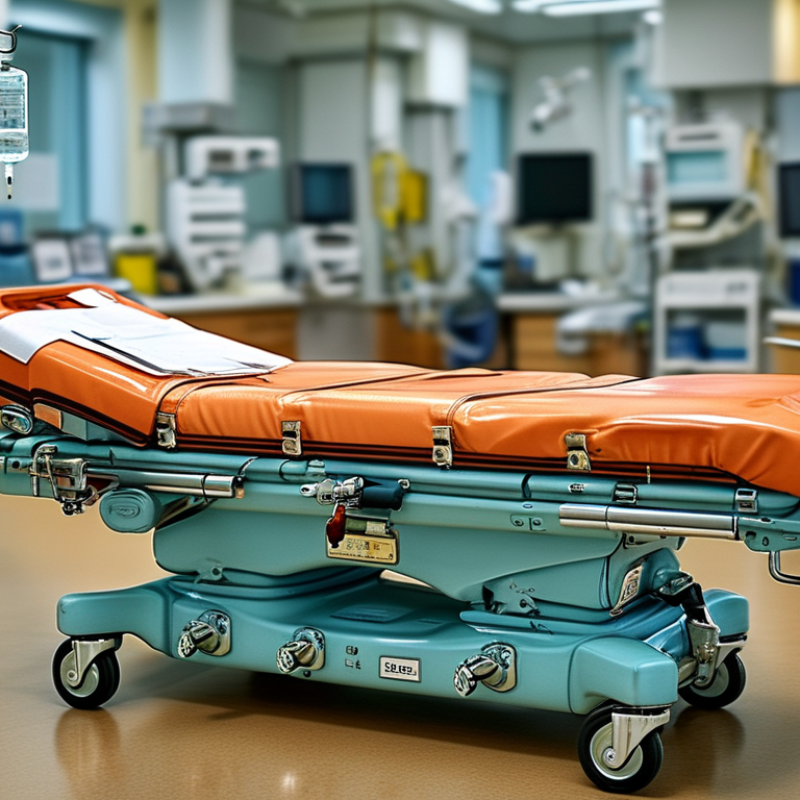
2026 How to Choose Stretcher Trolleys for Emergencies?
What Are Stretcher Trolleys and Why Are They Essential in Emergencies?
A stretcher trolley is a wheeled patient platform used for assessment, treatment, and transfer. It supports patients who cannot walk, sit safely, or tolerate unnecessary movement. In crowded emergency departments, a reliable trolley can reduce transfer delays. Small details matter. A stable brake, smooth casters, adjustable height, and secure side rails protect both patients and staff.
The World Health Organization’s Global Status Report on Road Safety 2023 estimates 1.19 million annual road traffic deaths worldwide. It also reports 20–50 million non-fatal injuries each year. Many patients need immediate movement from an ambulance to imaging, surgery, or observation. A trolley should therefore match real emergency routes, including narrow doors, uneven thresholds, and crowded corridors. Check its safe working load, mattress support, oxygen-cylinder storage, and compatibility with monitoring equipment. Emergency Medical Services systems also need clear cleaning procedures between patients.
Safety comes first.
In practice, choosing only by price can create hidden costs. Weak steering, poor wheel locks, or difficult height adjustment may slow a team during a critical minute. Research from the National Institute for Occupational Safety and Health highlights the physical risks of patient handling for healthcare workers. Powered or height-adjustable designs may reduce lifting demands, but they also require charging, training, and maintenance. No trolley is perfect. A sensible evaluation includes hands-on trials with clinical staff, not just a catalogue review. The best choice is the one that remains controllable when the corridor is crowded, the patient is unstable, and the team is under pressure.
During emergency transfers, patient safety depends on details that are easy to overlook. Clinical teams should check the trolley’s safe working load, frame stability, and locking system before purchase. Each caster should roll smoothly, then stop firmly on uneven hospital flooring. Brake pedals need clear access, even when staff wear gloves or move quickly. An adjustable backrest and height range can reduce lifting strain during treatment and transfer. Side rails should lock securely and release without trapping fingers. These controls matter when a patient is confused, weak, or connected to monitoring lines.
Comfort is not decorative; it can affect cooperation, breathing, and injury risk. Choose a pressure-distributing mattress with a wipe-clean, sealed cover. Rounded edges help prevent skin damage during long waits. Look for cushioning that stays supportive when the backrest is raised. A low entry height may help patients step onto the surface, while a higher position supports clinical procedures. However, excessive adjustment can confuse hurried staff. Controls should be labeled, reachable, and tested during realistic drills.
Emergency users also need practical storage, oxygen-cylinder support, and protected equipment mounts. These accessories must not widen the trolley beyond doorways or obstruct resuscitation. Check steering from both ends, especially around corners and crowded bays. Noise matters too; rattling wheels can increase anxiety in an already stressful room. Ask staff to test cleaning, transfers, and brake access with gloves. No checklist is perfect. A trolley may pass inspection yet feel awkward during a real handover. That weakness deserves recording, not hiding.
2026 How to Choose Stretcher Trolleys for Emergencies?
How to Match Trolley Types to Emergency Medical Scenarios?
Choosing a stretcher trolley starts with the emergency setting, not the catalogue. In an ambulance, a compact trolley needs secure locking, smooth loading, and reliable steering. For trauma cases, adjustable backrests and side rails help protect patients during movement. In crowded emergency departments, a narrow frame improves access between beds and equipment. Fit matters.
Outdoor rescues require larger wheels, strong brakes, and stable performance on uneven ground. A lightweight folding trolley may suit stairs, but it may offer less support for heavier patients. Bariatric emergencies need a reinforced frame, wider surface, and a tested safe working load. Do not estimate capacity by appearance. Check the technical data and staff training requirements.
For suspected spinal injuries, choose firm support, controlled positioning, and compatibility with transfer boards. During cardiac arrest, low-height adjustment and unobstructed access can help teams begin treatment quickly. Battery-powered height systems reduce lifting strain, yet they depend on charged batteries and regular inspections. That detail is easy to overlook. A checklist can still miss real conditions, such as wet floors, tight elevators, or limited staff. Match the trolley to the patient, route, lifting method, and local emergency protocols. Reassess the choice after drills and documented incidents.
Choosing a stretcher trolley for emergencies requires more than checking its maximum load. Mobility, adjustability, durability, and infection control affect every transfer. In real clinical assessments, staff should push the trolley over thresholds, tight corners, and wet-floor transitions. It must turn smoothly while carrying a patient and essential equipment. Test the brakes with full weight applied. Small caster problems can delay care. Do not judge mobility in a showroom alone.
Adjustability should support safe work for both patients and caregivers. Backrest, leg, and height controls need clear labels and reliable movement. A low position helps patient transfers, while a raised position reduces staff bending. Side rails should lock firmly and release without excessive force. During evaluation, try the controls while wearing gloves. This detail is often missed. I would also check whether emergency positioning can be completed quickly by one trained person. A complicated mechanism may look advanced but perform poorly under stress.
Durability depends on frame strength, wheel construction, mattress support, and repeated cleaning. Ask for load-test information, service records, battery expectations, and replacement-part availability. Infection control starts with smooth surfaces and sealed joints. Avoid deep seams, exposed fasteners, and absorbent materials near the mattress. Confirm that surfaces tolerate the facility’s approved disinfectants and required contact times. Removable mattresses and accessible undersides make cleaning more realistic. Yet perfect cleaning is not guaranteed; rushed staff may miss hidden corners. Practical design should reduce that risk, not merely promise durability.
Choosing stretcher trolleys in 2026 requires more than checking price and maximum load. Verify applicable requirements, including EN 1865 for ambulance use and local medical-device rules. Request evidence for brake performance, restraint strength, side-rail security, load testing, and disinfectant compatibility. A trolley may pass a brochure test yet fail beside a crowded emergency bay.
Maintenance often decides the real cost. The WHO Medical Equipment Maintenance Programme reports that up to 70% of medical equipment in some low- and middle-income settings is not operational, partly because maintenance systems are weak. This warning applies to simpler equipment too. Count replacement wheels, gas springs, mattresses, fasteners, batteries, inspection labor, and staff training. Ask how quickly common parts arrive. Also check whether one technician can complete a safe inspection without dismantling half the frame.
Total operating cost should cover purchase, delivery, setup, preventive servicing, repairs, cleaning time, downtime, and disposal. OECD Health Statistics 2024 reported average health spending of 9.2% of GDP across OECD countries in 2022, increasing pressure on every capital purchase. Build a five-year cost model using actual callouts and cleaning cycles. Cheap is not always economical. A spreadsheet can still lie. I would test three trolleys on wet floors, narrow lifts, and uneven thresholds before approval. That practical trial may expose weaknesses that compliance documents miss.
| Stretcher Trolley Category | Typical Emergency Use | Key Compliance and Safety Checks | Maintenance Requirements | Operational Advantages and Limitations | Indicative Total Operating Cost per Year* | Overall Suitability |
|---|---|---|---|---|---|---|
| Manual Hydraulic Trolley | Emergency departments, trauma bays, short-distance patient transfers | Check conformity with applicable medical-device requirements; verify safe working load, side-rail locking, backrest controls, brake performance, mattress flame resistance, and entrapment-risk controls. | Daily brake, wheel, rail, and frame inspection. Clean and disinfect after each patient. Periodic hydraulic-cylinder, gas-spring, fastener, and caster inspection according to the service schedule. | Good balance of cost, durability, and functionality. Requires manual height adjustment and staff effort when repositioning patients. | USD 550–1,100 | High |
| Electric Adjustable Trolley | High-volume emergency departments, bariatric care, imaging preparation, frequent height changes | Assess electrical safety, leakage-current testing, battery protection, emergency lowering, control lockout, safe working load, side-rail security, and protection against unintended movement. | Daily functional inspection and disinfection. Scheduled battery testing and replacement, actuator inspection, cable checks, electrical safety testing, and software or control-system review where applicable. | Reduces manual handling and supports ergonomic positioning. Higher purchase price, more components, and greater dependence on battery and electrical-system maintenance. | USD 900–1,800 | High |
| Emergency or Trauma Trolley | Resuscitation, trauma stabilization, urgent procedures, and rapid transfer within clinical areas | Verify rapid-access side-rail operation, secure oxygen-bottle holder, IV-pole stability, defibrillator shelf or mount, wheel and brake performance, patient restraint compatibility, and safe working load. | Daily inspection of rails, brakes, accessories, and mattress condition. Check oxygen-holder fasteners and IV-pole fittings frequently. Perform preventive servicing at least annually or as required by usage. | Optimized for urgent access and mobility. Accessories can increase weight, cleaning time, snagging risk, and replacement costs. | USD 650–1,350 | High |
| Bariatric Trolley | Emergency treatment and transfer of patients requiring a higher load capacity or wider patient surface | Confirm certified safe working load, frame stability, width-clearance requirements, reinforced mattress support, brake capacity, side-rail strength, transfer compatibility, and lift or ramp limitations. | Inspect frame welds, hydraulic or electric lifting components, casters, brakes, side rails, and mattress supports more frequently because of higher loading. Keep a documented load-capacity inspection record. | Provides greater patient capacity and stability. Heavier, wider, more difficult to maneuver, and usually more expensive to service and store. | USD 1,000–2,200 | High for bariatric care |
| Radiolucent Imaging Trolley | Emergency imaging, X-ray-supported procedures, and transfers where imaging access is required | Verify radiolucent surface design, imaging clearance, compatible mattress materials, patient protection features, brake reliability, side-rail performance, and safe working load. | Inspect the imaging surface for cracks, delamination, or contamination traps. Check brakes, casters, rails, and positioning mechanisms. Avoid cleaning agents that can damage radiolucent components. | Reduces patient transfers during imaging. Specialized surfaces and components may have higher replacement costs and require compatibility checks with imaging equipment. | USD 750–1,600 | High for imaging |
| Basic Manual Transport Trolley | Routine patient movement over short distances and lower-acuity emergency areas | Check safe working load, brake and caster performance, side-rail locking, mattress condition, structural integrity, and compliance with local medical-device and infection-control requirements. | Daily cleaning and brake inspection. Periodic caster lubrication or replacement, fastener tightening, rail inspection, mattress replacement, and frame examination. | Lowest acquisition and maintenance complexity. Limited positioning options and less suitable for prolonged treatment, critical care, or high-frequency height adjustment. | USD 350–800 | Medium |
| Foldable or Ambulance-Compatible Trolley | Pre-hospital response, ambulance loading, disaster response, and confined access routes | Verify compatibility with ambulance locking systems, restraint points, loading height, wheel and brake operation, folding-lock security, patient restraints, safe working load, and transport vibration resistance. | Inspect folding joints, locking pins, restraints, wheels, loading rollers, and frame after every demanding deployment. Clean and disinfect after each patient and replace worn restraints promptly. | Compact and suitable for transport environments. May offer fewer adjustment features and can require more frequent checks because of loading impacts and vibration. | USD 500–1,200 | High for transport |
| Ceiling-Lift or Transfer-Assist Compatible Trolley | Facilities prioritizing safe patient handling and reduced manual lifting during transfers | Confirm compatibility with transfer equipment, clearance dimensions, mattress and sling interfaces, side-rail operation, safe working load, brake performance, and local manual-handling policies. | Inspect transfer interfaces, frame, rails, wheels, brakes, and mattress supports. Coordinate trolley inspection with the maintenance schedule of the connected lifting equipment. | Can reduce staff lifting demands and injury risk. Requires adequate room layout, staff training, and compatibility with existing transfer systems. | USD 700–1,500 | High where compatible |
: Check the safe working load, stable frame, smooth casters, and accessible brakes. Each brake should stop the trolley on uneven hospital flooring. Side rails must lock securely and release without trapping fingers. Test every control with gloved hands.
Choose a pressure-distributing mattress with a sealed, wipe-clean cover. Rounded edges can reduce skin damage during longer waits. The mattress should remain supportive when the backrest rises. Comfort is not merely decorative.
A narrow frame can move between beds, monitors, and other equipment. Check doorway clearance before purchase. The trolley should steer from both ends around tight corners. A compact design may reduce space but limit some accessories.
Ambulance use requires secure locking, smooth loading, and reliable steering. The trolley must fit the vehicle and lock firmly during movement. Check transfers with realistic equipment attached. Small clearance problems can become serious delays.
Outdoor work needs larger wheels, strong brakes, and stable movement over uneven ground. A lightweight folding trolley may help on stairs. However, it might provide less support for heavier patients. Test it outside. Wet ground may expose weaknesses.
Bariatric transfers need a reinforced frame, wider patient surface, and verified safe working load. Never estimate capacity from appearance. Review technical data and staff training requirements. A wide trolley may also struggle in narrow elevators.
Suspected spinal injuries require firm support and controlled positioning. The trolley should work with approved transfer boards. During cardiac emergencies, low height and open access can support rapid treatment. Battery-powered height adjustment may reduce lifting strain. Charged batteries are still essential.
Push the loaded trolley over thresholds, tight corners, and wet-floor transitions. Test the brakes with full weight applied. Look for smooth surfaces, sealed joints, and removable mattresses. Avoid deep seams, exposed fasteners, and absorbent materials. Cleaning may still miss hidden corners.
Choosing the right stretcher trolley is essential for safe, efficient emergency care. This guide explains how to choose stretcher trolleys for emergencies by focusing on patient safety, comfort, stability, and ease of use. It covers important features such as secure side rails, reliable braking systems, adjustable back and height positions, strong frames, comfortable mattresses, and accessories that support different emergency procedures.
The article also shows how to match trolley types with situations such as ambulance transport, emergency rooms, operating areas, and intensive care. It explains how to assess mobility, adjustability, durability, infection-control design, regulatory compliance, maintenance requirements, and total operating costs. By comparing these factors together, healthcare facilities can select equipment that supports rapid patient handling, reduces operational risks, simplifies cleaning, and delivers dependable performance throughout its service life.

Medivara Medical