Patient comfort is no longer a minor feature of clinical equipment. It affects cooperation, recovery, sleep, and trust. In 2026, adjustable beds, examination tables, recliners, wheelchairs, and transfer systems are becoming more responsive to individual needs. Small adjustments matter. A raised leg rest can reduce pressure. A smoother backrest can help a patient breathe comfortably. A quieter motor can prevent unnecessary anxiety during nighttime care.
How to improve patient comfort with adjustable equipment requires more than buying products with multiple settings. Healthcare teams should examine real patient experiences, clinical evidence, caregiver feedback, and equipment safety. Dr. Roger Ulrich, a leading healthcare-environment researcher, has stated, “The physical environment can influence patients’ stress, satisfaction, and recovery.” This principle applies directly to equipment design and daily use. Comfort should be measured through posture, pressure, temperature, noise, dignity, and perceived control.
However, adjustable equipment is not automatically comfortable. Poorly fitted supports may create new pressure points. Complicated controls can frustrate older adults or patients with limited mobility. Staff may also overlook slow adjustments during busy shifts. That gap deserves attention. The best choices combine intuitive controls, stable construction, easy cleaning, and precise positioning. They also allow clinicians to adjust support without making patients feel helpless. This guide examines the leading adjustable equipment for 2026, while recognizing an important limitation: comfort remains personal, and useful design must be tested beside the patient, not only on a product specification sheet.
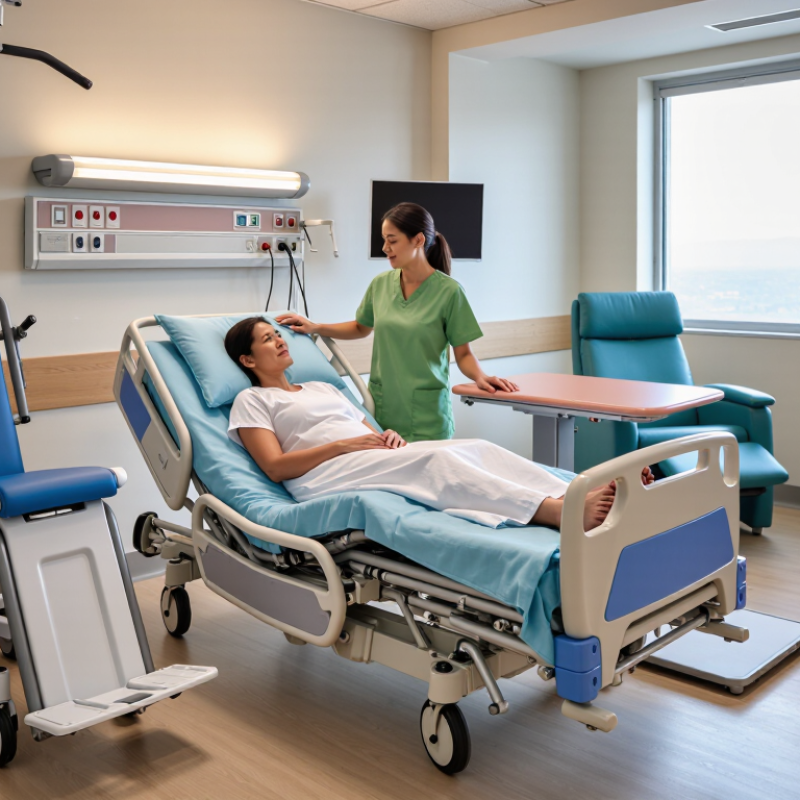
2026 Top Adjustable Equipment for Better Patient Comfort
What Adjustable Patient-Comfort Equipment Means in 2026
Adjustable patient-comfort equipment now means more than raising a bed or tilting a chair. It supports individual needs, safer movement, and calmer clinical routines. A suitable bed can change height, back angle, knee position, and pressure distribution. A recliner may help a patient sit upright without sudden strain. Small changes matter.
In 2026, comfort decisions should begin with observation. Clinicians can check breathing effort, swelling, skin condition, mobility, and the patient’s own words. Equipment should respond smoothly and remain stable during transfers. Clear controls help patients participate, while visible position indicators reduce avoidable mistakes. A quiet motor also matters at night. Sleep is clinical support.
Practical reliability requires more than advanced functions. Staff need documented adjustment procedures, cleaning checks, battery inspections, and regular safety assessments. Patients should not be positioned by guesswork. One setting may relieve pressure for one person but increase discomfort for another. That is easy to overlook. Feedback must guide the next adjustment, even when the first choice seemed reasonable. Equipment can assist care, but trained judgment remains essential.
Adjustable patient equipment can make routine care feel less stressful. A lower entry height helps wheelchair users transfer with less lifting. Smooth electric positioning also supports patients with limited strength or painful joints. Controls should use clear icons, tactile buttons, and simple labels. Small details matter.
Safety depends on more than movement. Locking casters should hold firmly on polished floors. Side supports need secure release mechanisms without trapping clothing or limbs. Rounded edges reduce accidental bumps during transfers. Easy-to-clean surfaces support practical infection-control routines, especially between appointments. Staff should check cables, hinges, and emergency functions regularly.
Comfort improves when adjustments match the individual patient. A contoured surface may reduce pressure behind the knees or lower back. Quiet motors can ease anxiety during examination. Extra clearance beneath the frame gives caregivers better working space. It also helps some mobility devices approach safely. Not every feature helps everyone. Overly complicated controls can create confusion, and poorly positioned accessories may restrict movement. A careful fit assessment remains necessary. One overlooked issue is reachability; patients should not depend entirely on staff to change their position. Equipment evaluations should include real transfer trials, cleaning checks, and feedback from patients with different abilities. That process may reveal flaws that product specifications miss.
2026 Top Adjustable Equipment for Better Patient Comfort
Adjustable beds suit patients who need easier repositioning, breathing support, or reduced pressure on painful joints. Electric height controls can help nurses work safely while allowing patients to enter and leave with less strain. For recovery after surgery, an adjustable backrest and leg section may improve rest during meals, reading, or medication checks. Comfort differs widely, though. A setting that helps one patient may increase discomfort for another.
Adjustable treatment chairs support different needs in clinics, rehabilitation rooms, and infusion areas. Tilt functions can assist patients with limited balance, while adjustable armrests help during examinations or therapy. Height-adjustable tables are useful for wheelchair users and patients who cannot stand for long. Transfer aids, including adjustable support rails and lift systems, can reduce twisting and sudden movement. Selection should follow a documented assessment, not appearance alone. Staff experience matters.
Tips: Check weight limits, control access, and emergency lowering features before use. Place controls where the patient can reach them safely. Test the equipment with a trained caregiver present. Watch for pressure points around heels, hips, and elbows. Cleanable surfaces are important. Small details matter. Reassess after movement, because comfort can change within minutes. Some equipment still feels awkward, and that should be recorded rather than ignored.
| Equipment Category | Best Suited Patient Need | Key Adjustable Functions | Typical Adjustment Range | Comfort Advantages | Important Safety Considerations |
|---|---|---|---|---|---|
| Electric Adjustable Hospital Bed | Patients requiring extended bed rest, assisted transfers, or frequent repositioning. | Bed height, backrest, knee section, and overall tilt on selected models. | Backrest: approximately 0–70° Height: approximately 40–80 cm |
Supports upright eating, reading, breathing comfort, caregiver access, and easier bed-to-chair transfers. | Use the lowest practical height when unattended; check side-rail use, brake engagement, and clearance before movement. |
| Adjustable Examination or Treatment Table | Patients needing examinations, wound care, therapy, or improved access for clinicians. | Powered or manual height adjustment, backrest angle, leg support, and table position. | Height: commonly approximately 45–95 cm Backrest: commonly 0–70° |
Reduces climbing effort, accommodates different body sizes, and allows more comfortable treatment positions. | Confirm the working load, lock casters when stationary, and assist patients with limited balance during transfers. |
| Tilt-in-Space Wheelchair | Wheelchair users with limited trunk control, fatigue, or a need for pressure-management positioning. | Seat tilt, backrest recline, elevating leg rests, head support, and armrest height. | Seat tilt: commonly approximately 0–45° Backrest recline: commonly approximately 90–160° |
Helps redistribute pressure, support posture, reduce sliding, and provide rest without requiring independent trunk movement. | Use a properly fitted pelvic belt when clinically indicated; monitor head, neck, skin, and shear forces during repositioning. |
| Adjustable Patient Recliner | Patients receiving infusion, dialysis, respiratory treatment, or prolonged seated care. | Backrest recline, leg-rest elevation, seat height, and armrest position on selected models. | Backrest: commonly approximately 90–160° Leg rest: multiple supported positions |
Provides gradual posture changes, lower-limb elevation, arm support, and improved comfort during long sessions. | Ensure the recliner is stable before transfer and keep tubing, lines, and drainage systems free from pinch points. |
| Height-Adjustable Overbed Table | Patients who eat, read, write, or use personal devices while in bed or a chair. | Table height, tabletop angle on selected models, and base position. | Height: commonly approximately 70–110 cm Angle: flat to a moderate reading angle |
Places meals and personal items within reach while reducing neck flexion and excessive shoulder movement. | Keep the base clear of casters and bed mechanisms; do not use the table as a handhold for standing. |
| Adjustable Shower or Commode Chair | Patients with reduced balance, weakness, limited standing tolerance, or toileting assistance needs. | Seat height, footrest position, armrest configuration, back support, and tilt on selected models. | Seat height: commonly approximately 43–58 cm Foot supports: adjustable to lower-leg length |
Improves transfer alignment, supports a stable seated posture, and reduces strain during bathing or toileting. | Lock wheels before transfers, use only on suitable surfaces, and follow the specified user weight limit. |
| Adjustable Leg and Foot Positioning Support | Patients with edema, postoperative leg discomfort, or difficulty maintaining a supported lower-limb position. | Leg elevation, knee angle, foot angle, and support height. | Elevation: low to heart-level positioning as clinically appropriate Angle: individualized to comfort and circulation |
Supports neutral alignment, may improve comfort during rest, and helps reduce pressure from unsupported heels. | Check circulation, skin condition, and sensation regularly; avoid excessive pressure behind the knee or on the heel. |
| Adjustable Positioning and Pressure-Redistribution Surface | Patients at risk of discomfort or skin injury from prolonged sitting or lying. | Air-cell pressure, firmness, support zones, or surface inclination depending on the system. | Settings should be adjusted to patient weight, posture, skin condition, and clinical assessment. | Can improve immersion, envelopment, posture support, and comfort while reducing concentrated loading on vulnerable areas. | Inspect the skin routinely, maintain correct inflation or setup, and never replace individualized repositioning or clinical assessment. |
Choosing adjustable equipment for clinical settings requires more than comparing height ranges or weight limits. Match each device to patient mobility, body size, transfer needs, and staff workflow. A hospital bed should support low positioning, controlled elevation, secure side protection, and rapid emergency adjustment. An examination table needs stable movement and enough clearance for assisted transfers. Small details matter.
Safety data supports this careful approach. The World Health Organization’s Global Patient Safety Action Plan 2021–2030 reports that one in ten patients experiences harm during healthcare, with more than half considered preventable. The U.S. Bureau of Labor Statistics reported 4.2 nonfatal injury cases per 100 full-time workers in healthcare and social assistance in 2023, compared with 2.4 across private industry. Adjustable equipment may reduce strain, but only when controls are intuitive and maintenance is consistent. A perfect fit is unrealistic. Clinical needs change quickly.
Tips: Test equipment with nurses, therapists, and patients before purchase. Measure doorways, transfer spaces, and cleaning access. Check load capacity under real conditions, not ideal ones. Review emergency lowering, battery performance, infection-control materials, and staff training. Record user feedback after installation. One overlooked control can create hesitation at the bedside. Standard references such as IEC 60601-2-52 can support safer medical-bed specifications, but local risk assessment remains essential.
Adjustable patient equipment should be fitted to the person, not simply placed beside the bed. Before use, trained staff should check height, backrest angle, support cushions, and wheel locks. Keep controls within easy reach, but prevent accidental activation. A small gap can create pressure or instability. I have found that asking the patient about comfort after five minutes reveals problems that a quick visual check misses. Their feedback matters.
Tips: Confirm the weight limit and adjustment range before positioning. Test every lock gently. Keep cables away from moving joints. Place feet flat when possible, and support limbs during repositioning. Record unusual sounds, uneven movement, or repeated control failures. Do not continue using equipment with damaged padding or loose hardware.
Clean high-touch surfaces after each patient, following the approved cleaning instructions for the material. Moisture should not collect near electrical controls. Inspect hinges, rails, fasteners, and casters during scheduled maintenance. Staff should document repairs and remove unsafe equipment from service. Daily checks can feel repetitive. They are still essential. One weakness in many routines is rushing the final inspection when the unit appears clean. Comfort can change quickly when a patient becomes tired, cold, or less mobile. Reassess positioning during longer sessions and after transfers.
It may change height, back angle, knee position, or pressure distribution. A recliner can support upright sitting with less strain. Small changes matter.
Observe breathing effort, swelling, skin condition, mobility, and patient feedback. Ask again after five minutes. Comfort can change quickly.
Simple labels, tactile buttons, and visible position indicators reduce mistakes. Patients may adjust their position more independently. Not always.
Firm wheel locks, secure side supports, rounded edges, and stable movement are important. Check that clothing and limbs cannot become trapped.
A lower entry height reduces lifting demands. Extra space beneath the frame may help mobility devices approach safely.
Inspect cables, hinges, padding, fasteners, casters, and emergency functions. Test every lock gently. Record unusual sounds or uneven movement.
Clean high-touch surfaces after every patient. Follow approved material instructions, and keep moisture away from electrical controls.
Remove equipment with damaged padding, loose hardware, repeated control failures, or unstable movement. Do not continue using it. A clean appearance proves little.
No. One position may relieve pressure for one person and increase discomfort for another. Reassess after transfers, during longer sessions, and when fatigue appears. I may miss subtle discomfort without patient feedback.
In 2026, adjustable patient-comfort equipment is designed to support safer, more personalized care by adapting to each patient’s body, condition, and mobility needs. Key features include adjustable height, positioning controls, pressure relief, stable support surfaces, easy-to-use controls, and accessibility options for patients and caregivers. This article explores major equipment categories, including adjustable beds, treatment chairs, examination tables, transfer aids, and support devices, explaining how each can improve comfort, dignity, and clinical efficiency for different patient needs.
It also provides practical guidance on selecting equipment for hospitals, clinics, and care facilities by considering patient requirements, staff workflow, space, cleaning needs, durability, and safety controls. The section “How to improve patient comfort with adjustable equipment” emphasizes correct positioning, gradual adjustments, clear communication, and regular observation. Proper setup, routine inspection, cleaning, maintenance, and staff training are essential for safe daily use and reliable long-term performance.
Medivara Medical