What Is a Defibrillator and Why Is It Essential in ERs?

Time:2026-09-18 Author:Aria
0%

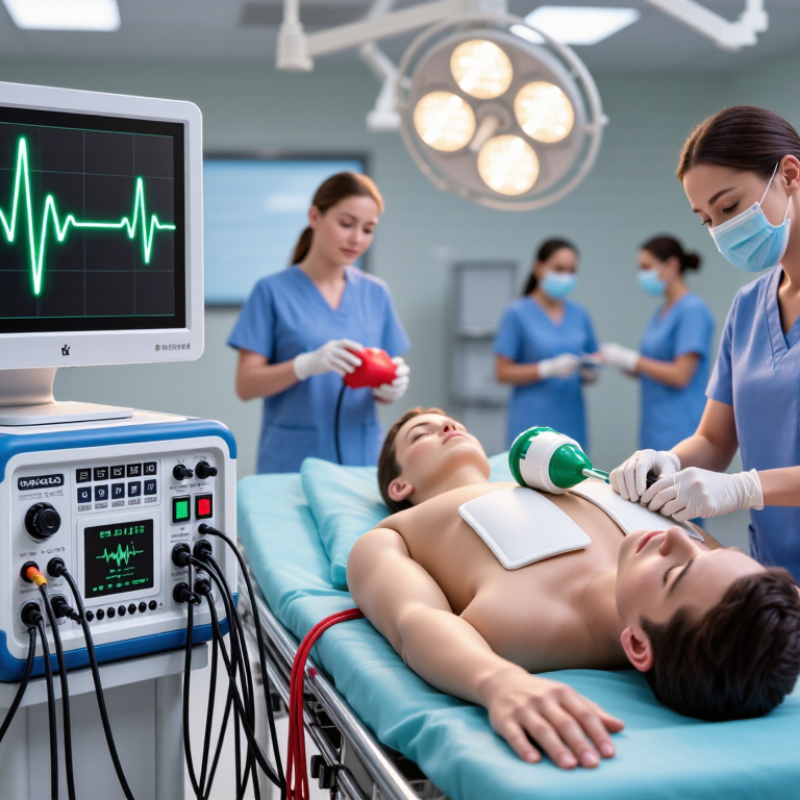
A defibrillator is not simply a machine that delivers a powerful shock. It analyzes heart rhythm, identifies certain life-threatening arrhythmias, and supports rapid clinical decisions when seconds matter. In a crowded emergency room, its pads may be placed on a patient’s bare chest while alarms sound, staff begin CPR, and a monitor displays ventricular fibrillation. The process is highly technical, yet urgently practical.

This explains Why defibrillators are essential in emergency rooms. The American Heart Association reported more than 356,000 emergency medical services–assessed out-of-hospital cardiac arrests in the United States in 2022. Survival to hospital discharge remained limited, showing how quickly cardiac arrest becomes irreversible. AHA guidance also emphasizes that early CPR and early defibrillation can improve outcomes when ventricular fibrillation or pulseless ventricular tachycardia is present. However, a defibrillator cannot restart every stopped heart. That assumption needs correcting.

Emergency medicine expert Dr. Robert W. Neumar has emphasized, “Early defibrillation is the definitive treatment for ventricular fibrillation.” His point reflects a central emergency-care principle: rhythm recognition and shock delivery must happen without avoidable delay. Modern devices provide automated analysis, but trained professionals still interpret the patient’s condition, coordinate compressions, manage the airway, and reassess circulation. Technology helps. It does not replace judgment. Understanding what defibrillators can—and cannot—do makes their role in emergency rooms clearer, safer, and more credible.
What Is a Defibrillator and Why Is It Essential in ERs?

What a Defibrillator Is and How It Restores a Heart Rhythm

A defibrillator is a medical device that delivers a controlled electrical shock to the heart. In an emergency room, it is used mainly for ventricular fibrillation or pulseless ventricular tachycardia. These rhythms make the heart quiver or beat ineffectively. Blood then stops reaching the brain and other vital organs.

The shock briefly stops the heart’s disorganized electrical activity. This pause may allow the heart’s natural pacemaker to establish a more coordinated rhythm. “Restarting the heart” is a useful phrase, but it is not completely accurate. A defibrillator does not repair every cardiac problem, and it cannot replace CPR, medication, or urgent clinical judgment. Staff attach adhesive pads to the chest, check the rhythm, warn everyone to stand clear, and deliver the shock only when appropriate. Some devices analyze the rhythm automatically, while others require trained professionals to interpret it.

Tips: Keep the chest dry and uncovered before placing the pads. Do not touch the patient during analysis or shock delivery. Continue CPR when advised. Small details matter, although real emergencies rarely feel orderly. Proper training and repeated practice can reduce hesitation when every second counts.

What Is a Defibrillator and Why Is It Essential in ERs?

A defibrillator delivers a controlled electrical shock to terminate ventricular fibrillation or pulseless ventricular tachycardia. The shock briefly depolarizes the heart muscle, giving the natural conduction system an opportunity to restore an organized rhythm. The chart shows pediatric dose calculations based on commonly used guidance of 2 J/kg for the first shock and 4 J/kg for the second shock.

Important: Actual energy selection depends on the patient, defibrillator type, rhythm, and local resuscitation protocol. Defibrillation should be performed only by trained healthcare professionals.

The Main Types of Defibrillators Used in Emergency Care

What Is a Defibrillator and Why Is It Essential in ERs?

The Main Types of Defibrillators Used in Emergency Care

A defibrillator delivers a controlled electrical shock to help restore an effective heart rhythm. In emergency rooms, speed matters because ventricular fibrillation and pulseless ventricular tachycardia can stop useful circulation. These rhythms need immediate assessment and treatment. A defibrillator does not restart every stopped heart. It works only for specific rhythm problems.

Manual external defibrillators are common in emergency departments. Trained clinicians read the heart rhythm, choose the energy level, and deliver the shock when appropriate. Many devices also provide synchronized cardioversion for unstable rhythms with a pulse. Automated external defibrillators, or AEDs, analyze the rhythm and give spoken instructions. They permit fewer manual decisions, which helps during sudden cardiac arrest. Some patients also have implanted cardioverter-defibrillators, which monitor the heart continuously and deliver therapy inside the body. They are not substitutes for emergency assessment.

Tips: Check the patient, call for help, and begin CPR when needed. Attach pads to bare, dry skin and follow the device prompts. Keep everyone clear during analysis and shock delivery. Do not touch the patient then. Real emergencies are rarely tidy. Pads may need repositioning, alarms may be hard to hear, and staff must communicate clearly. Even experienced teams can hesitate, so repeated training and equipment checks remain essential.

When Defibrillation Is Needed in the Emergency Room

What Is a Defibrillator and Why Is It Essential in ERs?

When Defibrillation Is Needed in the Emergency Room

A defibrillator delivers a controlled electrical shock to the heart. In the emergency room, clinicians use it mainly for ventricular fibrillation or pulseless ventricular tachycardia. These rhythms create chaotic or dangerously rapid electrical activity. The heart cannot pump blood effectively. An immediate shock may restore an organized rhythm.

One hard truth: defibrillation cannot restart every stopped heart. It does not treat asystole, often called a flatline, or pulseless electrical activity. Those conditions require high-quality CPR, oxygen support, medication, and treatment of the underlying cause. The American Heart Association’s 2024 statistics report approximately 292,000 adult in-hospital cardiac arrests annually in the United States. Survival to hospital discharge is about 23.6%. Outcomes vary widely between hospitals and patient groups.

Timing matters sharply. The European Resuscitation Council recommends immediate defibrillation for a shockable rhythm, while CPR continues during preparation. A monitor shows the rhythm, and trained staff check for safety before delivering the shock. If a patient has a pulse but remains unstable from certain tachyarrhythmias, synchronized cardioversion may be appropriate instead. That distinction is easy to miss during pressure-filled care. It deserves repeated training.

Real emergencies are rarely neat. Pads may adhere poorly to sweaty skin, and the rhythm can change within seconds. Staff must reassess after every shock and follow current resuscitation protocols. Evidence supports speed, but judgment still matters.

How Medical Teams Operate and Monitor Defibrillators

In an emergency room, a defibrillator becomes part of a coordinated response. Medical teams connect adhesive pads to the patient’s bare, dry chest. A monitor displays the heart rhythm in real time. Clinicians assess the rhythm before selecting defibrillation or synchronized cardioversion. These are different interventions. An unsynchronized shock may treat certain chaotic rhythms, while synchronized energy follows a detectable heartbeat. The team also checks pulse, breathing, and the patient’s clinical condition.

Clear communication protects everyone nearby. One clinician calls for a safety check. Another confirms that nobody is touching the bed. The operator charges the device only after the team is ready. All clear must mean all clear. Chest compressions resume immediately when indicated. Staff continue monitoring rhythm, oxygen levels, blood pressure, and the patient’s response. They may adjust treatment according to clinical protocols and medical judgment.

Defibrillator care starts before an emergency. Staff inspect cables, pads, battery status, and self-test indicators during scheduled checks. Expired supplies can create dangerous delays. Training includes simulated scenarios, because real emergencies are noisy and fast. Human attention still slips. A rushed glance may miss a disconnected pad or poor skin contact. Teams should document each intervention, review the response, and discuss what could improve. That reflection is not failure. It is part of safer practice.

What Is a Defibrillator and Why Is It Essential in ERs? - How Medical Teams Operate and Monitor Defibrillators

Summary of common defibrillator functions, emergency-department workflows, and monitoring considerations. Actual use must follow current clinical protocols and the device manufacturer’s instructions.
Data Dimension Clinical Information How ER Teams Use or Monitor It Why It Matters
Primary Purpose A defibrillator delivers a controlled electrical shock to the heart when a shockable rhythm, such as ventricular fibrillation or pulseless ventricular tachycardia, is present. Clinicians rapidly assess the patient, confirm cardiac arrest, begin CPR, attach monitoring electrodes or pads, and analyze the rhythm. Early defibrillation can be critical because the likelihood of successful resuscitation decreases as untreated cardiac arrest continues.
Main Device Types Common categories include manual external defibrillators, automated external defibrillators, monitor-defibrillators, and implantable cardioverter-defibrillators. ER teams generally use monitor-defibrillators that combine ECG monitoring, manual defibrillation, synchronized cardioversion, and external pacing. Different devices support different levels of clinical decision-making and treatment.
Shockable Rhythms Ventricular fibrillation and pulseless ventricular tachycardia are treated with unsynchronized defibrillation as part of a resuscitation algorithm. The team verifies rhythm information from the ECG and ensures that no one is touching the patient before delivering the shock. Defibrillation is not appropriate for every cardiac-arrest rhythm; asystole and pulseless electrical activity require other interventions rather than a shock.
Synchronized Cardioversion Synchronized cardioversion delivers a shock timed to the R wave of the ECG, commonly for unstable tachyarrhythmias with a pulse. Clinicians select synchronization mode, confirm visible R-wave markers, monitor the patient continuously, and provide sedation when clinically appropriate. Timing the shock helps reduce the risk of delivering energy during the vulnerable phase of ventricular repolarization.
Typical Energy Selection Energy settings depend on the defibrillator waveform, rhythm, patient condition, and local resuscitation protocol. Adult biphasic protocols commonly begin within a range of approximately 120–200 joules for defibrillation, but settings vary. The team follows the specific device instructions and approved clinical guidelines rather than relying on a universal setting. Using the correct energy and waveform helps balance the need for effective treatment with the risk of myocardial and skin injury.
Electrode Pad Placement For adults, pads are commonly placed in an anterolateral or anteroposterior position, with good contact on clean, dry skin. Staff avoid placing pads directly over medication patches, implanted devices when possible, excessive chest hair, or wet surfaces; hair may be clipped if it prevents adhesion. Correct placement and contact reduce transthoracic impedance and improve the chance that energy reaches the heart effectively.
ECG Monitoring Defibrillator monitors can display cardiac electrical activity through ECG leads or multifunction pads. Teams assess rhythm, rate, QRS appearance, rhythm changes, and the patient’s clinical status while avoiding artifact from movement or CPR when interpreting the tracing. ECG analysis supports decisions about defibrillation, cardioversion, pacing, and ongoing resuscitation.
CPR Integration High-quality CPR remains essential before and after rhythm analysis and shock delivery. One team member performs compressions while others prepare pads, manage the airway, administer medications, and operate the monitor. Pauses are kept as short as possible. Defibrillation alone cannot restore circulation reliably without effective chest compressions and post-shock care.
Safety Check Before Shock The operator confirms that the patient is not being touched and that oxygen delivery, fluids, cables, and nearby equipment will not create an avoidable hazard. A clear verbal warning is given, the team visually confirms clearance, and the shock button is pressed only after the area is safe. Electrical safety procedures protect patients, clinicians, and bystanders from accidental shock.
Physiological Monitoring Depending on the device and patient condition, monitoring may include ECG, pulse oximetry, noninvasive blood pressure, capnography, and temperature. Clinicians trend vital signs, oxygenation, ventilation, blood pressure, and end-tidal carbon dioxide during and after resuscitation. These measurements help evaluate circulation, ventilation, response to treatment, and the need for further intervention.
External Pacing Many ER monitor-defibrillators can provide temporary transcutaneous pacing for selected patients with symptomatic bradycardia or conduction problems. Staff select an appropriate pacing mode, increase current until electrical and mechanical capture are achieved, and reassess the patient continuously. Electrical capture on the monitor must be accompanied by evidence of a pulse and effective circulation.
Battery and Readiness Checks Readiness depends on battery charge, pad expiration, cable condition, self-test results, and availability of accessories. ER staff perform scheduled checks, review self-test indicators, confirm adequate battery status, inspect cables and pads, and document problems. A device that is not ready can delay time-critical treatment.
Pad and Cable Inspection Disposable pads require intact packaging, valid expiration dates, and conductive gel that has not dried out. Cables should be free from cuts, exposed wires, or loose connections. Staff inspect supplies at the start of shifts and after use, replace damaged or expired components, and return the unit to its designated location. Reliable electrical contact and intact cables are necessary for accurate monitoring and safe energy delivery.
Post-Shock Assessment After a shock, the team immediately resumes CPR when indicated and reassesses rhythm and signs of circulation according to the applicable resuscitation algorithm. Clinicians monitor ECG, pulse, blood pressure, oxygenation, ventilation, neurological status, and recurrence of arrhythmia. Return of an organized rhythm does not always mean that effective circulation has been restored.
Documentation Clinical records may include initial rhythm, shock times, energy settings, number of shocks, CPR intervals, medications, vital signs, and patient response. The team records events directly or verifies automatically stored device data when available, then completes the resuscitation record. Accurate documentation supports continuity of care, quality improvement, equipment review, and legal requirements.
Staff Competency Safe operation requires training in basic or advanced life support, rhythm recognition, device operation, electrical safety, and emergency teamwork. Hospitals use competency assessments, simulation training, drills, and periodic refreshers appropriate to each staff member’s role. Well-coordinated teams can reduce treatment delays and prevent avoidable operational errors.

Why Defibrillators Are Essential for Time-Critical Cardiac Emergencies

What Is a Defibrillator and Why Is It Essential in ERs?

A defibrillator delivers a controlled electrical shock to the heart. It can stop certain chaotic rhythms, such as ventricular fibrillation, and allow an organized rhythm to return. It does not restart every stopped heart. That distinction matters.

Cardiac emergencies are measured in minutes, not hours. The American Heart Association’s 2024 Heart Disease and Stroke Statistics Update reports about 356,000 out-of-hospital cardiac arrests annually among adults in the United States. Nearly 90% are fatal. The AHA’s 2020 resuscitation guidelines also note that survival can fall by roughly 7% to 10% for every minute without defibrillation in shockable arrests. In an ER, teams therefore connect pads, analyze the rhythm, and shock when clinically indicated. Chest compressions continue around this process.

A defibrillator is not a magic reset button. Clinicians must confirm the rhythm, protect staff, and coordinate ventilation, medication, and high-quality CPR. Small delays can arise from clothing, poor pad contact, or unclear communication. Those details seem ordinary. They can be decisive. The European Resuscitation Council’s 2021 guidelines emphasize early defibrillation and structured team response, especially during witnessed ventricular fibrillation or pulseless ventricular tachycardia. Yet equipment alone cannot guarantee survival; training, maintenance, and repeated simulation remain essential.

FAQS

What does a defibrillator do during a cardiac emergency?

It delivers a controlled electrical shock to correct certain dangerous heart rhythms. It does not restart every stopped heart.

Which heart rhythms may require defibrillation?

Ventricular fibrillation and pulseless ventricular tachycardia may respond to defibrillation. Immediate rhythm assessment remains essential.

Why does timing matter so much?

Cardiac arrest is measured in minutes. Survival may decrease by roughly 7% to 10% for each minute without defibrillation.

How does a manual external defibrillator work?

A trained clinician reads the rhythm and selects the energy level. The device may also provide synchronized cardioversion for unstable rhythms with a pulse.

What makes an automated external defibrillator different?

It analyzes the rhythm and gives spoken instructions. This reduces manual decisions during sudden cardiac arrest.

What should responders do before using the device?

Check the patient, call for help, and begin CPR when needed. Attach pads to bare, dry skin.

Is it safe to touch the patient during analysis or shock delivery?

No. Everyone must stand clear during analysis and shock delivery. Clear communication prevents accidental contact.

Why are training and equipment checks still necessary?

Real emergencies are messy. Pads may shift, alarms may be unclear, and staff may hesitate. Repeated practice helps, but it cannot guarantee survival.

What role does CPR play during defibrillation?

High-quality chest compressions continue around rhythm analysis and shocks. Defibrillation works within a coordinated emergency response, not alone.

Conclusion

A defibrillator is a medical device that delivers a controlled electrical shock to the heart when a dangerous rhythm prevents it from pumping effectively. The shock briefly resets the heart’s electrical activity, giving it a chance to return to a coordinated rhythm. In emergency care, common types include manual defibrillators operated by trained professionals, automated external defibrillators that analyze the rhythm and guide the user, and implanted devices designed for long-term protection.

Defibrillation is mainly used for life-threatening rhythms such as ventricular fibrillation or pulseless ventricular tachycardia, not for every cardiac arrest or irregular heartbeat. In the emergency room, medical teams quickly assess the patient, attach monitoring pads, select an appropriate energy level, ensure everyone is clear, and deliver the shock when indicated. They then monitor the heart rhythm, pulse, breathing, and response while continuing other emergency treatments. Why defibrillators are essential in emergency rooms is their ability to address certain fatal rhythms within minutes, when rapid action can significantly improve the chance of restoring circulation and saving a life.

Aria

Aria

Aria is a dedicated marketing professional with a deep passion for innovative strategies and a keen understanding of our company's product offerings. With a wealth of experience in the industry, Aria excels at crafting engaging content that highlights the unique features and benefits of our......