Selecting the best hospital furniture for hygiene in 2026 requires more than choosing modern colours or antimicrobial labels. The CDC reports that about one in 31 hospital patients has at least one healthcare-associated infection on any given day. The WHO Global Report on Infection Prevention and Control also estimates that seven in 100 patients in high-income countries acquire at least one healthcare-associated infection during acute care. These figures make furniture design part of infection prevention, not merely interior decoration.
A practical guide should explain How to select furniture that meets hospital hygiene standards through measurable details. Inspect sealed seams, rounded edges, non-porous surfaces, removable cushions, and smooth caster housings. A gap beneath a chair can collect dust, hair, and disinfectant residue. Small details matter. Materials must also tolerate the hospital’s approved cleaning agents without cracking, fading, or becoming sticky. Manufacturers should provide cleaning instructions, chemical-resistance data, and relevant test documentation. Claims alone are weak evidence.
Infection-prevention specialists, nurses, facilities managers, and procurement teams should review furniture together. A sample chair should undergo a realistic cleaning trial before large-scale purchasing. Can staff disinfect it quickly between patients? Does the upholstery remain intact after repeated wiping? These questions expose weaknesses that brochures often hide. No checklist is perfect. Even strong specifications can fail when maintenance schedules, staff training, or replacement planning are ignored. The most reliable 2026 selection process combines CDC and WHO guidance, documented manufacturer evidence, user feedback, and direct observation in busy clinical spaces.
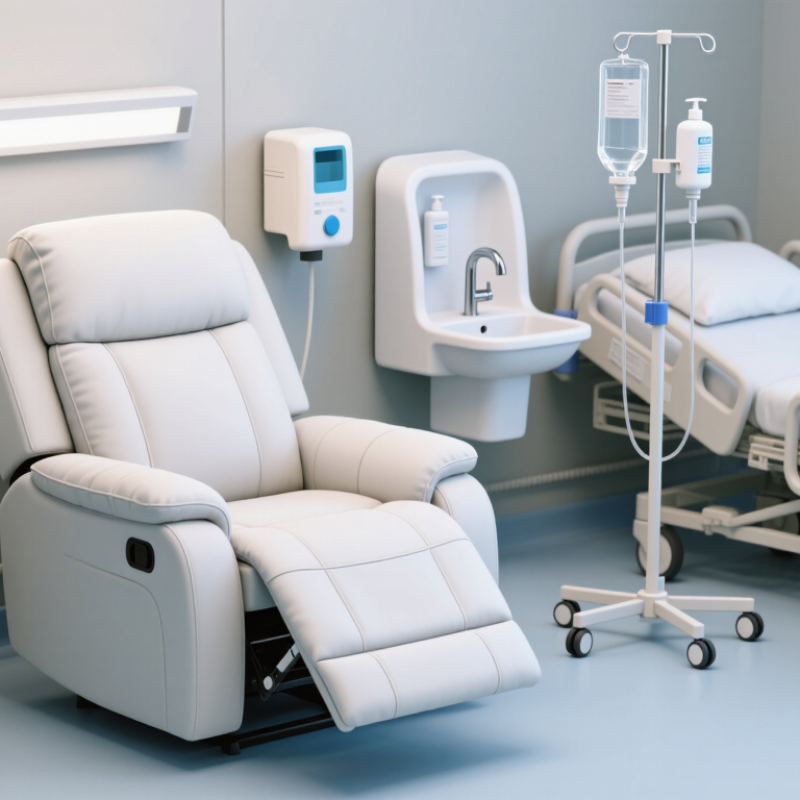
Define hygiene requirements before selecting 2026 hospital furniture. Start with real cleaning routines, not attractive product images. Surfaces should be nonporous, smooth, and resistant to repeated disinfectant use. Sealed edges matter because tiny gaps can hold moisture and organic residue. Rounded corners also reduce soil buildup and simplify wiping.
Map high-touch areas, including armrests, drawer pulls, mattress platforms, and caster brakes. Ask infection prevention staff, nurses, and environmental services workers to review each design. Their daily experience often reveals problems missed during procurement. Request cleaning compatibility data and inspect sample units under bright light. Check whether casters roll away from walls and whether staff can reach hidden frames. Antimicrobial claims should not replace proper cleaning. They may sound reassuring, but evidence and maintenance still matter.
Tips: Test a full cleaning cycle. Use the intended disinfectant. Look for swelling, discoloration, sticky residue, or exposed seams. Record drying time. A small mock room can reveal more than a brochure. Also review repair access and replacement parts, because damaged upholstery can quickly weaken hygiene control. Some requirements may need revision after staff testing. That is not failure. It is useful evidence for better purchasing decisions.
| Furniture Area | Hygiene Requirement | Recommended Specification | Procurement Target for 2026 | Verification Method | Hygiene Rationale |
|---|---|---|---|---|---|
| External surfaces | Low soil retention and easy routine cleaning | Smooth, non-flaking, non-absorbent surfaces with no exposed untreated wood or fabric in high-touch zones | No visible cracks, blisters, exposed fibers, open pores, or permanently stained areas after inspection | Visual inspection, touch inspection, and review of technical surface data | Smooth and sealed surfaces reduce locations where organic soil and microorganisms can accumulate. |
| Joints and seams | Minimize dirt traps and inaccessible gaps | Welded, sealed, or tightly fitted joints; rounded transitions; flush fasteners where practical | No open joints or gaps that cannot be reached with the facility’s approved cleaning tools | Gap inspection using the approved cleaning brush, cloth, or wipe | Accessible, sealed joints support complete removal of soil during scheduled cleaning. |
| Material porosity | Prevent absorption of liquids and contaminants | Closed-cell, sealed, or non-porous materials for clinical contact surfaces; sealed edges on composite panels | No liquid absorption, swelling, or edge delamination during the specified service life | Manufacturer material declaration, edge inspection, and liquid-exposure assessment | Non-absorbent construction helps prevent hidden contamination and moisture-related deterioration. |
| Disinfectant compatibility | Maintain surface integrity after repeated chemical exposure | Compatibility with the facility’s approved disinfectants, including alcohol-based, chlorine-based, hydrogen-peroxide, or quaternary-ammonium products where used | No cracking, tackiness, discoloration, loss of coating, or corrosion after the supplier’s stated repeated-use test | Review chemical-resistance data and perform a site-approved sample test before purchase | A damaged surface is harder to clean and may create additional microbial reservoirs. |
| Metal components | Resist corrosion in wet-cleaning environments | Appropriately finished stainless steel or corrosion-protected steel; avoid exposed cut edges and damaged coatings | No visible red rust, pitting, flaking, or coating failure during acceptance inspection | Visual inspection, supplier corrosion data, and review of cleaning-chemical exposure | Corrosion and flaking create rough areas that retain soil and compromise cleanability. |
| Upholstery and cushions | Limit fluid penetration and enable effective decontamination | Fluid-resistant, cleanable medical upholstery with sealed seams; removable covers only where the laundering process is validated | No exposed absorbent foam, split seams, or liquid penetration during the intended cleaning process | Liquid-barrier assessment, seam inspection, and cleaning-cycle trial | Sealed upholstery reduces contamination of internal foam and supports faster turnover between users. |
| Castors and feet | Allow cleaning around and beneath movable furniture | Enclosed or smooth castors, sealed bearings where applicable, and sufficient floor clearance for cleaning equipment | All floor-contact areas remain reachable without dismantling the furniture | Cleaning-access trial with the facility’s mop, vacuum, or automated equipment | Accessible undersides and smooth wheels reduce dust, splash, and soil accumulation. |
| Handles and high-touch points | Support frequent wiping without surface degradation | Simple geometry, rounded edges, minimal texture, and securely attached handles with no hollow dirt traps | Can be fully wiped within the facility’s defined high-touch cleaning time | Timed wipe test, visual inspection, and chemical-resistance review | High-touch surfaces require reliable, repeatable cleaning without hidden recesses. |
| Storage interiors | Prevent dust accumulation and simplify internal cleaning | Smooth internal panels, sealed shelf edges, removable shelves, and minimal internal hardware | All internal surfaces accessible for inspection and wiping without specialist tools | Access audit, shelf-removal trial, and cleaning demonstration | Accessible interiors reduce neglected areas where dust and contamination may accumulate. |
| Moisture management | Dry quickly after cleaning and avoid retained moisture | Drainable or sloped surfaces where appropriate; no concealed cavities that retain wash water | No standing water or persistent dampness after the approved cleaning procedure | Post-cleaning observation and moisture-retention inspection | Rapid drying limits conditions that support microbial survival and material damage. |
| Antimicrobial claims | Avoid substituting product claims for cleaning controls | Treat antimicrobial additives as optional; prioritize cleanability, compatibility, durability, and validated cleaning procedures | No antimicrobial claim accepted without independent test evidence, defined organisms, exposure conditions, and regulatory review | Review test report, stated limitations, and applicable local regulations | Antimicrobial surfaces do not replace routine cleaning, disinfection, or hand hygiene. |
| Maintenance and repair | Keep damaged furniture out of service until hygiene performance is restored | Replaceable seals, cushions, castors, and hardware; documented repair instructions and spare-part availability | Defined inspection frequency and corrective-action process for cracks, rust, peeling, or torn upholstery | Maintenance audit, service documentation, and replacement-part review | Prompt repair prevents minor damage from becoming a persistent contamination risk. |
| Cleaning documentation | Make correct cleaning repeatable for staff | Furniture-specific cleaning instructions stating approved products, dilution, contact time, rinsing, drying, and prohibited chemicals | Instructions available at delivery and aligned with the facility’s infection-prevention program | Document review and staff cleaning demonstration | Clear instructions reduce chemical misuse, surface damage, and inconsistent cleaning outcomes. |
Choose smooth, nonporous surfaces that resist repeated disinfectant use. Sealed edges and rounded corners reduce hidden moisture and residue.
Tiny gaps can trap moisture, dust, and organic residue. Inspect seams under bright light. Small defects matter.
Check armrests, drawer pulls, mattress platforms, hinges, caster brakes, and hidden frames. These areas receive frequent contact but may be missed during cleaning.
Ask nurses, infection prevention staff, and environmental services workers to test the furniture. Their daily experience may reveal practical problems.
Use the facility’s intended disinfectant during a complete cleaning cycle. Watch for swelling, discoloration, sticky residue, exposed seams, and delayed drying.
No. Antimicrobial treatment does not replace regular cleaning, suitable materials, or careful maintenance. That assumption needs challenging.
Request independent test reports, tested organisms, contact times, and testing conditions. Vague claims such as “permanent protection” deserve skepticism.
Powder-coated steel suits high-impact frames. Sealed compact laminate suits cabinets and worktops. Material names alone are not enough.
Damaged upholstery and seals can weaken hygiene control quickly. Replaceable components may extend safe use. I may be overly cautious, but hidden damage is easy to miss.
Yes. A small mock room shows cleaning access, caster movement, drying time, and awkward handles. Brochures cannot show everything.
Choosing the best hospital furniture for 2026 requires a hygiene-focused evaluation that goes beyond appearance and price. Start by identifying the needs of each clinical area, including exposure to fluids, frequency of disinfection, patient contact, and infection-control risks. To understand how to select furniture that meets hospital hygiene standards, assess nonporous materials, seamless construction, sealed edges, smooth surfaces, and antimicrobial performance where appropriate. Furniture should be easy to clean, resistant to commonly used disinfectants, and designed to reduce areas where dirt and pathogens can accumulate.
Selection should also consider ergonomic support, patient and staff safety, structural durability, repair requirements, and environmental impact. Evaluate weight capacity, mobility, stability, recyclable materials, product lifespan, and maintenance schedules. Finally, compare options against relevant standards, available budgets, and the hospital’s workflow. The most suitable furniture will support efficient cleaning, reliable infection prevention, comfortable use, and long-term value without disrupting clinical operations.

 Medivara Medical