Accurate patient monitoring systems can mean the difference between timely intervention and a missed clinical change. In a busy intensive care unit, a small oxygen decline may appear before visible breathing distress. A reliable monitor gives nurses and physicians time to assess the patient, confirm the reading, and respond appropriately. It also supports safer decisions about medication, ventilation, hydration, and discharge planning. Yet accuracy is not automatic. Motion, poor sensor contact, low skin temperature, and electrical interference can distort vital signs. A quiet alarm does not always mean a stable patient.
How to ensure patient monitoring systems are accurate requires more than purchasing advanced equipment. Hospitals need validated devices, scheduled calibration, suitable sensors, and clear maintenance records. Staff should understand how placement affects readings, especially with pulse oximeters, blood pressure cuffs, and electrocardiogram leads. Comparing displayed values with clinical observations remains essential. A cool finger, for example, may produce a questionable oxygen saturation result. Manual checks can reveal that problem.
Alarm settings also deserve careful review. Excessive alarms create fatigue, while narrow settings may delay recognition. Device data should be checked against laboratory results or bedside assessments when the situation is unclear. Training must include realistic scenarios, not only classroom instructions. Even experienced teams can overlook a loose cable during a stressful event. That weakness deserves honest attention. Accurate monitoring depends on technology, human judgment, and dependable procedures working together. Small improvements in each area can protect patients when every heartbeat matters.
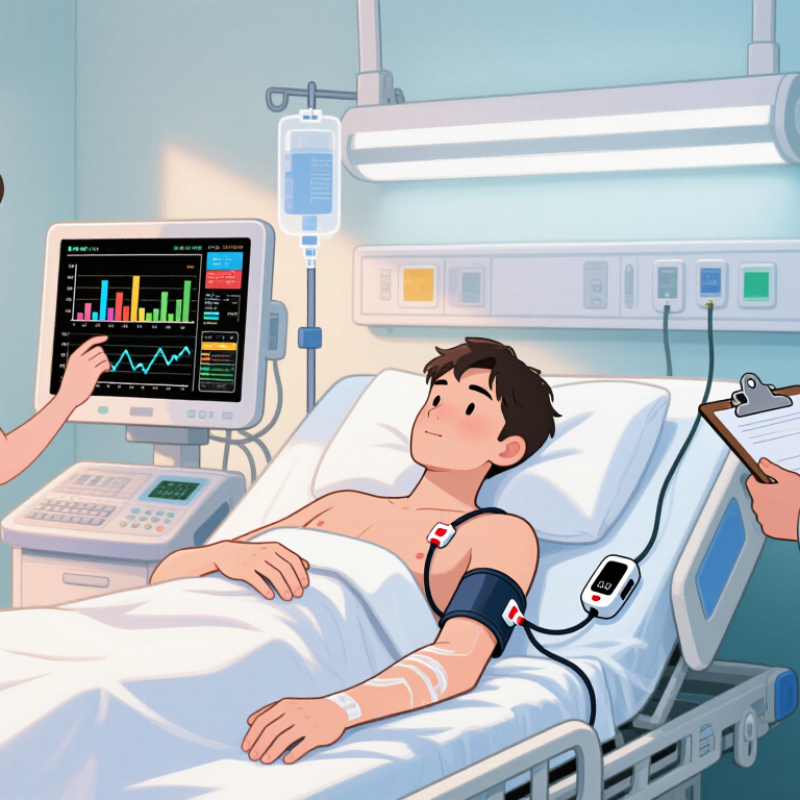
Patient monitoring systems measure vital signs that reveal how the body is responding in real time. Common measurements include heart rate, blood pressure, body temperature, breathing rate, and oxygen saturation. Each value answers a different clinical question. A rising heart rate may signal pain, fever, anxiety, or blood loss. Low oxygen saturation may indicate breathing difficulty, but a cold finger can also distort the reading.
Many systems record electrical heart activity through an electrocardiogram. This can show rhythm changes that are not visible during a routine examination. Some advanced monitors also measure carbon dioxide levels, invasive blood pressure, or blood glucose. These measurements require careful setup and trained interpretation. Numbers alone do not explain the patient’s condition.
Context matters greatly. A blood pressure cuff placed over clothing can produce unreliable results. Movement, poor sensor contact, and bright light may affect readings. I have seen staff trust a single abnormal number too quickly, then discover a loose sensor. That mistake deserves reflection. Repeated measurements, physical assessment, and patient history create a safer picture. Accurate monitoring depends on both dependable technology and attentive human judgment. Small changes can matter.
Patient monitoring systems continuously measure vital signs that can indicate changes in cardiovascular, respiratory, and metabolic status. The chart shows commonly used resting reference ranges for healthy adults; actual clinical thresholds may vary by patient and care setting.
Reference ranges shown: heart rate 60–100 beats/min, respiratory rate 12–20 breaths/min, oxygen saturation 95–100%, body temperature 36.5–37.5 °C, and systolic blood pressure 90–120 mmHg. These ranges are educational and should not replace professional medical assessment.
Accurate patient monitoring turns changing physiology into usable clinical information. Heart rate, oxygen saturation, blood pressure, and temperature can shift within minutes. Reliable readings help clinicians notice deterioration before symptoms become obvious. Numbers need context. A value should be compared with the patient’s baseline, medications, activity, and recent treatment.
During bedside care, clear trends often support faster and safer decisions. A falling oxygen level may prompt a sensor check, repositioning, or further respiratory assessment. Persistent low blood pressure may lead to fluid evaluation, medication review, or urgent escalation. Accurate data also reduces unnecessary alarms, which can distract staff from genuine risks. However, monitoring systems cannot replace trained observation or clinical judgment.
No monitor is perfect. Motion, poor circulation, loose sensors, and skin temperature can distort results. That gap matters. Clinical teams should confirm unexpected readings and investigate differences between the device and the patient’s condition. Alarm limits also need individual adjustment, not automatic acceptance. A quiet monitor does not always mean a stable patient. Regular calibration, documented checks, and staff training improve reliability. Careful communication remains essential, especially during handovers, when a small trend may carry more meaning than one isolated number.
Why Accurate Patient Monitoring Systems Matter?
Risks Caused by Inaccurate Patient Data
Inaccurate patient data can turn a manageable condition into an emergency. A falsely low oxygen reading may trigger unnecessary treatment, while a falsely normal value can delay urgent care. Small errors matter.
Clinical teams often depend on continuous readings for oxygen saturation, heart rate, blood pressure, and temperature. Poor sensor placement, motion, cold skin, loose cables, or dried electrodes can distort these values. A monitor may display precise numbers, yet precision does not guarantee accuracy.
The danger increases when staff trust one isolated reading. A nurse might see a sudden heart-rate spike after repositioning a patient. The cause could be movement, not cardiac deterioration. However, dismissing every unusual result is also unsafe. Each abnormal value needs comparison with symptoms, previous trends, manual checks, and equipment condition.
Timing creates another risk. Delayed data can hide rapid changes, especially in intensive care or during transport. Incorrect patient identification can attach valid readings to the wrong medical record. That mistake is preventable, but busy environments make it possible.
Reliable monitoring requires trained staff, regular calibration, clear alarm settings, and documented verification. Clinicians should question readings that conflict with the patient’s appearance, breathing, or reported symptoms. Technology supports judgment; it cannot replace it. Some systems still produce confusing alerts. That weakness deserves review, not blame.
Accurate patient monitoring depends on more than the screen showing a stable number. Sensor quality, correct placement, and regular calibration strongly influence every reading. A loose oxygen sensor may display a delayed value. Cold fingers can weaken the signal. Patient movement can create sudden, false changes.
Clinical teams should also consider patient condition and monitoring conditions. Low blood flow, sweating, skin characteristics, and electrical interference may affect measurement quality. In practice, nurses often compare monitor data with breathing, skin color, pulse, and patient comments. A clean number can still mislead.
Software design matters too. Reliable systems filter noise without hiding meaningful changes. Alarm settings should match the patient’s condition, not simply use factory defaults. Staff need clear training, routine equipment checks, and documented maintenance. Data should transfer accurately between devices and clinical records.
No system is perfect.
Independent testing and clinical validation provide stronger evidence than marketing claims. Healthcare facilities should review accuracy across different patient groups and real working environments. They should also investigate repeated discrepancies instead of ignoring them. I have found that small workflow problems, such as poor sensor placement, can undermine advanced technology. Continuous review remains necessary because patient monitoring accuracy depends on equipment, people, and conditions working together.
Key technical, clinical, and environmental factors that influence the reliability of patient-monitoring measurements
| Measurement or Factor | Why It Matters | Representative Accuracy or Performance Reference | Main Sources of Error | Recommended Verification Practice | Clinical Impact of Poor Accuracy |
|---|---|---|---|---|---|
| Electrocardiography (ECG) | Accurate ECG signals support heart-rate calculation and recognition of rhythm abnormalities. | Diagnostic ECG systems commonly use a sampling rate of at least 250 samples per second; higher rates may improve waveform detail. | Electrode displacement, poor skin preparation, muscle movement, electromagnetic interference, and incorrect lead placement. | Inspect cables and electrodes before use, confirm lead placement, and perform scheduled electrical-safety and signal-quality checks. | False alarms, missed arrhythmias, inaccurate heart-rate readings, or unnecessary clinical intervention. |
| Pulse Oximetry (SpO₂) | SpO₂ accuracy is essential when assessing oxygenation and detecting deterioration in respiratory status. | For many clinical pulse-oximetry devices, a commonly cited performance objective is an arterial oxygen saturation root-mean-square accuracy of approximately 3 percentage points across the validated range under controlled test conditions. | Motion, low perfusion, poor probe positioning, ambient light, skin temperature, nail products, and dyshemoglobinemia. | Use the correct sensor, check the pulse waveform and perfusion indicator, keep the extremity warm, and compare unexpected readings with the clinical presentation. | Unrecognized hypoxemia or inappropriate oxygen therapy. |
| Non-Invasive Blood Pressure (NIBP) | Reliable blood-pressure measurements guide diagnosis, medication decisions, and detection of shock or hypertension. | A widely used validation criterion for automated blood-pressure measurement is a mean difference within ±5 mmHg with a standard deviation of ≤8 mmHg versus a reference method. | Incorrect cuff size, arm position, patient movement, talking, arrhythmia, rapid cuff inflation, and unsupported posture. | Select the correct cuff size, position the cuff at heart level, repeat unexpected readings, and follow a documented validation schedule. | Incorrect treatment decisions, missed hypotension, or delayed recognition of hypertensive crises. |
| Body Temperature | Small temperature changes can indicate infection, inflammation, hypothermia, or treatment response. | Many clinical electronic thermometers are designed for accuracy around ±0.1°C to ±0.2°C, depending on the measurement site, device type, and operating conditions. | Measurement site, probe placement, recent drinking or bathing, environmental temperature, probe contamination, and calibration drift. | Use the same validated site when trending results, allow equipment to reach operating conditions, and verify calibration according to the device procedure. | Delayed detection of fever or hypothermia and inaccurate assessment of treatment response. |
| Respiratory Rate | Respiratory-rate changes may be an early indicator of respiratory compromise or clinical deterioration. | Performance depends on the sensing method; a practical clinical target for many systems is approximately ±2 breaths per minute within the validated adult operating range. | Irregular breathing, talking, movement, weak impedance signals, shallow breaths, and algorithmic misclassification. | Compare automated values with direct observation, confirm the waveform quality, and reassess during changes in patient condition. | Delayed escalation for respiratory distress or inaccurate early-warning scores. |
| Sensor Position and Patient Contact | Even a well-designed monitor cannot produce reliable data when the sensor is incorrectly positioned or poorly attached. | Signal quality should remain within the device’s validated operating range; readings outside that range should be treated as uncertain rather than precise. | Loose adhesive, excessive pressure, cable tension, incorrect anatomical placement, sweat, edema, and skin damage. | Check contact, alignment, skin condition, cable routing, and the displayed signal-quality indicator at every assessment. | Intermittent readings, signal dropout, false alarms, and unnecessary sensor replacement. |
| Motion and Artifact Rejection | Movement can distort physiological signals and cause algorithms to interpret noise as a clinical event. | Accuracy should be evaluated separately for stationary and motion conditions because performance in controlled testing may not represent real-world movement. | Patient repositioning, tremor, transport, shivering, bed vibration, and loose connections. | Review the waveform before acting on an unexpected value and use clinically appropriate repositioning or repeated measurements. | False tachycardia, false desaturation, missed events, or alarm fatigue. |
| Calibration and Preventive Maintenance | Component aging and mechanical wear can gradually increase measurement bias without obvious visual warning. | Maintenance intervals should follow the manufacturer’s validated instructions, institutional policy, and applicable medical-device requirements; no single interval is suitable for every device. | Sensor aging, pressure-system leaks, battery degradation, damaged cables, software changes, and inadequate cleaning. | Keep maintenance records, test alarms, inspect accessories, verify calibration, and remove equipment from service when results are questionable. | Systematic errors may affect multiple clinical decisions before the problem is detected. |
| Alarm Performance | Accurate detection is only useful when alarms are generated promptly, clearly, and at clinically appropriate thresholds. | Alarm limits and delay settings should be configured according to patient condition and institutional policy; alarm response must be assessed together with signal quality. | Improper limits, excessive delay, poor sensor contact, alarm congestion, muted alerts, and unreviewed defaults. | Individualize limits, test visual and audible indicators, document alarm-response procedures, and review recurring nuisance alarms. | Alarm fatigue, delayed intervention, or unnecessary patient distress. |
| Data Transmission and Time Synchronization | Reliable data transfer ensures that clinicians see the correct value for the correct patient at the correct time. | Systems should preserve measurement timestamps, patient association, units, and data integrity throughout transfer and display. | Network interruptions, incorrect patient assignment, clock drift, duplicate records, interface failures, and delayed updates. | Check connectivity, synchronize system clocks, verify patient identity, monitor missing-data events, and audit interface performance. | Wrong-patient decisions, delayed response, incomplete documentation, or misleading trends. |
| Environmental Conditions | Temperature, humidity, pressure, electrical interference, and lighting can affect sensors and electronic circuits. | Equipment should be operated within the environmental limits specified for its validated use; performance outside those limits cannot be assumed. | Extreme temperature, condensation, high humidity, electromagnetic interference, dust, vibration, and unstable power. | Maintain the care environment within specified limits and investigate unusual readings after environmental changes. | Intermittent faults, measurement drift, data loss, or premature equipment failure. |
| Patient-Specific Factors | Physiological conditions may affect measurement algorithms even when the equipment is functioning correctly. | Every measurement should be interpreted within the device’s validated population, range, and stated limitations. | Arrhythmias, low perfusion, obesity, edema, burns, skin pigmentation, abnormal hemoglobin, and pediatric or neonatal physiology. | Review device limitations, choose suitable accessories, compare with another clinically appropriate method, and document relevant conditions. | Misinterpretation of results and failure to recognize a clinically significant change. |
Reliable patient monitoring is not only about buying accurate equipment. Healthcare providers must build dependable routines around it. A monitor may display heart rate, oxygen saturation, blood pressure, and respiratory rate within seconds. However, poor sensor placement, movement, or weak connections can distort those readings. A quiet number is not always a safe number.
Clinical teams improve reliability through regular calibration, clear maintenance records, and practical staff training. Nurses should know when to replace a sensor, repeat a measurement, or question an unexpected result. Alarm settings also need patient-specific review. Excessive alarms create fatigue, while unsuitable limits may delay attention. No system is flawless. Human judgment still matters.
Tips: Check sensors before each shift. Compare unusual readings with the patient’s appearance and manual observations. Record equipment issues immediately. Use short simulation sessions to practise alarm responses. Review near-misses without blame, because small failures often reveal larger workflow weaknesses. Keep backup devices available during transport, cleaning, or technical service. Teams should also explain monitoring results clearly to patients, since anxiety or confusion can affect cooperation and data quality. Reliability improves when technology, training, documentation, and clinical experience work together.
Sensor quality, correct placement, calibration, and patient movement all affect readings. No system is perfect.
A loose oxygen sensor may show a delayed value. Check the sensor’s position before trusting an unexpected result.
Yes. Cold fingers may weaken the signal and reduce measurement quality. Warmth and blood flow matter.
A clean number can still mislead. Staff should observe breathing, skin color, pulse, and patient comments.
Movement can create sudden false changes. Sweating, skin characteristics, and weak connections may also disturb measurements.
Factory settings may not fit every condition. Excessive alarms cause fatigue, while unsuitable limits may delay attention.
Teams should check sensors before each shift, calibrate equipment, and record maintenance. Small faults matter.
Repeat the measurement and compare it with clinical observations. Investigate recurring differences instead of ignoring them.
Short practice sessions help staff respond to alarms and equipment problems. Human judgment still matters.
They should review independent testing, clinical validation, patient groups, and real working conditions. Marketing claims are not enough.
Accurate patient monitoring systems play a vital role in modern healthcare by measuring essential indicators such as heart rate, blood pressure, oxygen saturation, temperature, respiratory rate, and other relevant clinical data. Reliable measurements help healthcare professionals recognize changes in a patient’s condition, make timely decisions, adjust treatment, and respond quickly to potential complications. In contrast, inaccurate patient data may lead to delayed intervention, unnecessary treatment, incorrect diagnoses, or increased risks to patient safety.
How to ensure patient monitoring systems are accurate involves several factors, including proper sensor placement, regular calibration, equipment maintenance, staff training, and selecting devices appropriate for each patient and clinical environment. Healthcare providers can also improve reliability by checking unusual readings against the patient’s symptoms, using standardized monitoring procedures, and documenting equipment performance. Combining dependable technology with professional judgment and continuous quality control helps create a safer, more effective monitoring process and supports better clinical outcomes.

Medivara Medical